
Every child's brain is different. Understanding why changes everything.
geniuslane is doctor-led, psychology-supported and technology-enabled. We do not start by asking which therapy a child needs. We start by working out who this child is, why they are finding things difficult, and what needs to change around them.
Book in English, Hindi or Arabic
Takes about 2 minutes — a real person calls you back within 24 hours.
Start nowIf any of this sounds familiar, you're in the right place
Parents come to us with everyday worries long before they have a label. Start where you are.
Not talking yet
Few or no words when other children the same age are chatting.
Limited eye contact
Doesn't look back or respond to their name as expected.
Milestones slipping
Sitting, walking or playing seems behind the curve.
Very active / inattentive
Can't settle, struggles to focus, always on the go.
Big, frequent meltdowns
Everyday changes trigger distress that's hard to calm.
Struggling at school
Falling behind, or teachers have raised concerns.
A diagnosis is where the work starts, not where it stops
“Developmental delay” describes what is happening. It does not explain why — and on its own it tells nobody what to do differently on Monday morning.
So before we recommend anything, we carry out a thorough clinical and developmental evaluation: to establish the correct diagnosis, to understand this child's individual profile, to identify associated medical problems, and to find what is actually in the way.
A child's potential can be limited by more than their condition. It can be limited by a diagnosis that was never quite right, expectations that do not fit, an environment working against them, or medication they no longer need.
Read our approachWhat we are trying to answer
- Is there an underlying medical or neurological cause?
- Is there a genetic condition?
- Has there been a brain injury?
- Is epilepsy affecting development or behaviour?
- Is medication contributing to the difficulties?
- Is this primarily neurodiversity rather than brain disease?
- What are this child's strengths?
- What needs to change around the child?
Medical, neurological, psychological and developmental — together
A developmental paediatrician leads the assessment, because many of the questions that matter early on are medical ones. Psychological and developmental assessment sits alongside it.
We are interested in the whole child rather than in assigning a label. Investigations follow the assessment, not the other way round — which is also the position of UK NICE guidance, and which is why most children have very few of them.
Different, rather than defective
Just as no two plants grow in exactly the same way, no two human brains develop in exactly the same way. A neurodivergent child may process communication, sensory information, emotion, learning, attention or change differently from the child sitting next to them.
Being neurodivergent does not, by itself, mean a child's brain is damaged — and it does not rule out a genetic condition, epilepsy or a brain injury either. Both can be true, which is exactly why the assessment matters.
A child should not grow up repeatedly receiving the message: you are wrong, because you are not like everybody else.
How we think about neurodiversityProfile the child, change what is around them, measure what happens
Our brain and early-skills profiling — the Brain Early Skills Test (BEST) — sets out what a child can already do alongside what they find hard. A score on its own changes nothing; the profile is only useful once it becomes specific recommendations.
- STEP 1
Profile the child
A doctor-led clinical and developmental assessment, and a profile of how this particular child learns, communicates, senses and copes.
- STEP 2
Understand the child
Work out what is actually getting in the way — a medical cause, an untreated problem, an environment that does not fit, or a mixture.
- STEP 3
Change the environment
Practical, specific recommendations for the people around the child: at home, at school, and in everyday routines.
- STEP 4
Support development
Therapy and medical treatment where they are indicated, aimed at the things the profile identified rather than a standard package.
- STEP 5
Measure progress
Reassess on a schedule, so progress is measured rather than assumed, and the plan changes as the child does.
The most powerful developmental environment a child has is everyday life
A child might spend an hour a week with a therapist. They spend the rest of it with parents, brothers and sisters, grandparents, teachers, carers and their community. A plan that only exists inside appointments is working with a very small fraction of the time available.
So families are meant to understand their child's profile themselves, rather than stay dependent on professionals to interpret it. The MyGeniusLane app carries the plan, the guidance and the reminders into daily life.
School matters for the same reason, only more so. Parents can change a great deal at home, but if a child then spends six hours a day in an environment that does not understand them, progress is limited by arithmetic.
Almost every parent and teacher we meet is trying hard to help. What is missing is rarely effort or goodwill — it is specific information about this particular child.
Support for schoolsSpecialist care across neurodevelopment and neurology
Including children whose epilepsy, brain injury or genetic condition sits alongside developmental difficulties — where each one changes how the others should be managed.
Developmental delay
Support when motor, cognitive or social development is behind expectations.
Learn more →Speech delay
Help for late talkers and children with communication difficulties.
Learn more →Autism / ASD
Assessment and personalised, family-centred support.
Learn more →ADHD
Assessment and support for attention, focus and self-regulation.
Learn more →Dyslexia
Assessment and support for reading and specific learning difficulties.
Learn more →Cerebral palsy
Multidisciplinary support for movement, posture and developmental needs.
Learn more →Epilepsy
Diagnosis and management of seizures alongside developmental care.
Learn more →Brain injury
Targeted early intervention after an injury to the developing brain.
Learn more →Genetic conditions
Testing when the assessment indicates it, and a plan for what it means.
Learn more →Each part exists to feed the next
These are not separate products that happen to share a name.
- 1
Clinical assessment
Medical, neurological, developmental and psychological evaluation by the clinicians the child's situation calls for.
- 2
An individual profile
What this child can already do, what they find hard, and the conditions under which they do best.
- 3
An individualised plan
Written from the profile — what to change, what to work on, and what to watch.
- 4
Parent support through MyGeniusLane
The plan, guidance and reminders in the parents' hands between appointments, rather than in a report in a drawer.
- 5
School and professional support
The same understanding of the child shared with the people who teach and care for them.
- 6
Staff education
Clinicians and staff trained through the geniuslane Training Academy, so families meet the same approach at every centre.
- 7
Ongoing monitoring
Reassessment at intervals, tracking what has changed and what has not.
- 8
The plan adapts
Recommendations are rewritten as the child develops, because what a four-year-old needs is not what a nine-year-old needs.
Intelligence that supports clinicians, and does not replace them
A pioneering AI-supported neurodevelopmental platform, built from years of geniuslane's clinical and family-support experience.
geniuslane has been running this model of assessment and digital family support since around 2018. What the system draws on is the clinical knowledge and longitudinal learning accumulated over that period — and its job is translation: carrying what a clinical team knows into the weeks between reviews, in a form a parent can act on.
AI supports clinical care. It does not replace clinical judgement.
It does not diagnose, decide treatment or change medication, and nothing it produces reaches a family as clinical advice without a clinician standing behind it.
How we use AIChoose the right pathway
Whichever describes you best — the first step is the same conversation.
I am concerned about my child's development
No diagnosis, just worries about milestones, speech or behaviour.
We need a diagnosis
Something is clearly different and we want to understand what.
We have a diagnosis but are not progressing
Therapy is happening and it is not making the difference we hoped.
Epilepsy or neurological review
Seizures, medication questions, or epilepsy alongside developmental difficulties.
Autism or neurodevelopmental assessment
Assessment for autism, ADHD and related neurodevelopmental conditions.
Support for my school or service
You teach or care for a child and want to understand their profile.
Is my child developing on track?
A gentle check across the areas we support. Not a diagnosis — but a clear next step.
Is my child developing on track?
A few quick questions across the areas we support. Answer the ones that apply to your child's age.
This quick check is for guidance only and is not a diagnosis. Children develop at different rates. If you have any concerns — or notice possible seizures or sudden changes — speak with a qualified professional.
Find a centre
In person across India (Lucknow, Delhi, Agra, Varanasi and more) and the UK, or online worldwide.
11 centres match
📍 Lucknow
geniuslane Gomti Nagar
Our flagship Lucknow centre in Gomti Nagar — assessment and therapy for autism, ADHD and developmental delay.
📍 Lucknow
geniuslane Jankipuram
Neurodevelopmental assessment and family support for children across north Lucknow.
📍 Lucknow
geniuslane Ashiyana
Child development care serving south Lucknow — early intervention, speech and behaviour support.
📍 London
geniuslane Ickenham
Our UK clinic in Ickenham, West London — paediatric neurodevelopmental assessment and follow-up.
📍 Agra
geniuslane Agra
Assessment and therapy for autism, ADHD, speech and developmental concerns in Agra.
📍 Varanasi
geniuslane Varanasi
Child development services for families across Varanasi and eastern Uttar Pradesh.
📍 Raebareli
geniuslane Raebareli
Local assessment and early-intervention support for children in Raebareli.
📍 Delhi
geniuslane Delhi
Our Delhi centre in Janakpuri — autism, ADHD and learning-difficulty assessment and therapy.
📍 Kashipur
geniuslane Kashipur
Neurodevelopmental care for children in Kashipur and the surrounding Uttarakhand region.
📍 Gorakhpur
geniuslane Gorakhpur
Assessment, therapy and parent guidance for families across Gorakhpur.
📍 Video appointment
Online consultation
Secure video consultations with our specialists from anywhere in the world.
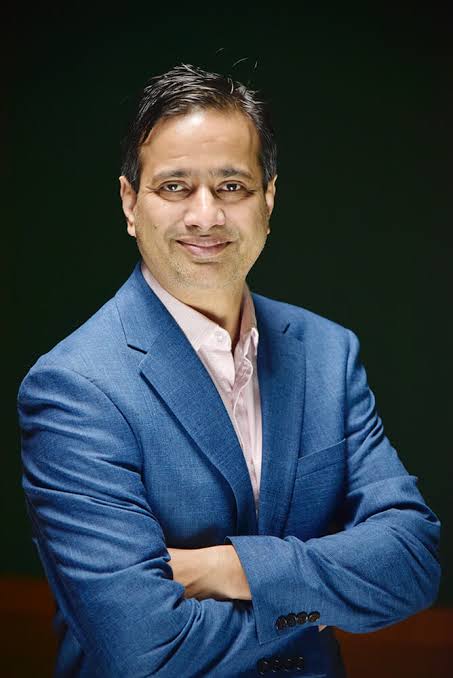
Dr Rahul Bharat
Dr Bharat is MBBS (University of Calcutta) and FRCPCH — a Fellow of the Royal College of Paediatrics and Child Health — with CCT (UK) and SPIN training in Child Neurology, Epilepsy and Neurodisability at Cambridge, and 20 years' experience in the NHS. Dr Bharat leads our multidisciplinary teams supporting children with autism, ADHD, developmental delay, cerebral palsy, epilepsy and complex neurodevelopmental needs — and is an expert in applying AI to technology development in neurology and neurodisability.
MyGeniusLane — your child's plan, in your pocket
The profile, the recommendations and the reminders where the development actually happens: at home, between appointments.
Questions parents ask
Request an appointment
Choose your language. We'll confirm within 24 hours.